


Hey, it’s been two weeks already since the last issue. Thanks for still being around🫰.
This time, I’m diving into a topic that’s been heating up lately. One that is as polarizing as it is personal.
No debates, just real insights from years of experience. I hope it adds some nuance to the conversation.
Remote vs. on-site has been one of the biggest debates of the last decade. And like every debate, it’s loaded with drama.
I won’t pretend to have a definitive answer. This debate is endless and flawed by essence.
However, I’ve lived both sides intensely for more than 15 years. I’ve got a damn good aerial view of how they really work.
I’ve done on-site at the highest levels. I’ve worked remotely, at length, even before it was mainstream.
I’ve seen them drive incredible focus. I’ve seen them literally break people—myself included.
It’s all about balance. The way we work shapes the way we build. For better or worse.
In 2025, it’s time to ditch the old remote clichés.
David Hoang, former VP of Design at Replit, put it best in The Office is a Productivity Tool:
The optics on the remote work end assume if people are working remotely, they are slacking off.
For a lot of people, remote work is still tied to COVID-19.
Most of us spent weeks, if not months, working from home during the pandemic. For the unprepared, it was a disaster.
But for some others, like myself, it was just business as usual, after having spent 8 years remotely as a freelancer.
Working fully remote at Zenly during lockdown was a game-changer. No commute, no office distractions.
Fair enough, Slack notifications tripled and Zoom meetings dragged for hours.
Remote unlocks a level of deep work that’s almost impossible in an office. If you have the right setup.
Not everyone does.
Parents juggling work and kids in a 50m² Parisian apartment got crushed. Some of my coworkers barely made it through and struggled with anxiety.
The expectation vs. reality gap is massive.
We all dream of OG iPhone designer Mike Matas’s workplace or Isaac French’s setup. But as far as I’m concerned, my setup was a scratched IKEA dining table for over a decade. I only upgraded to a real workstation after the pandemic.
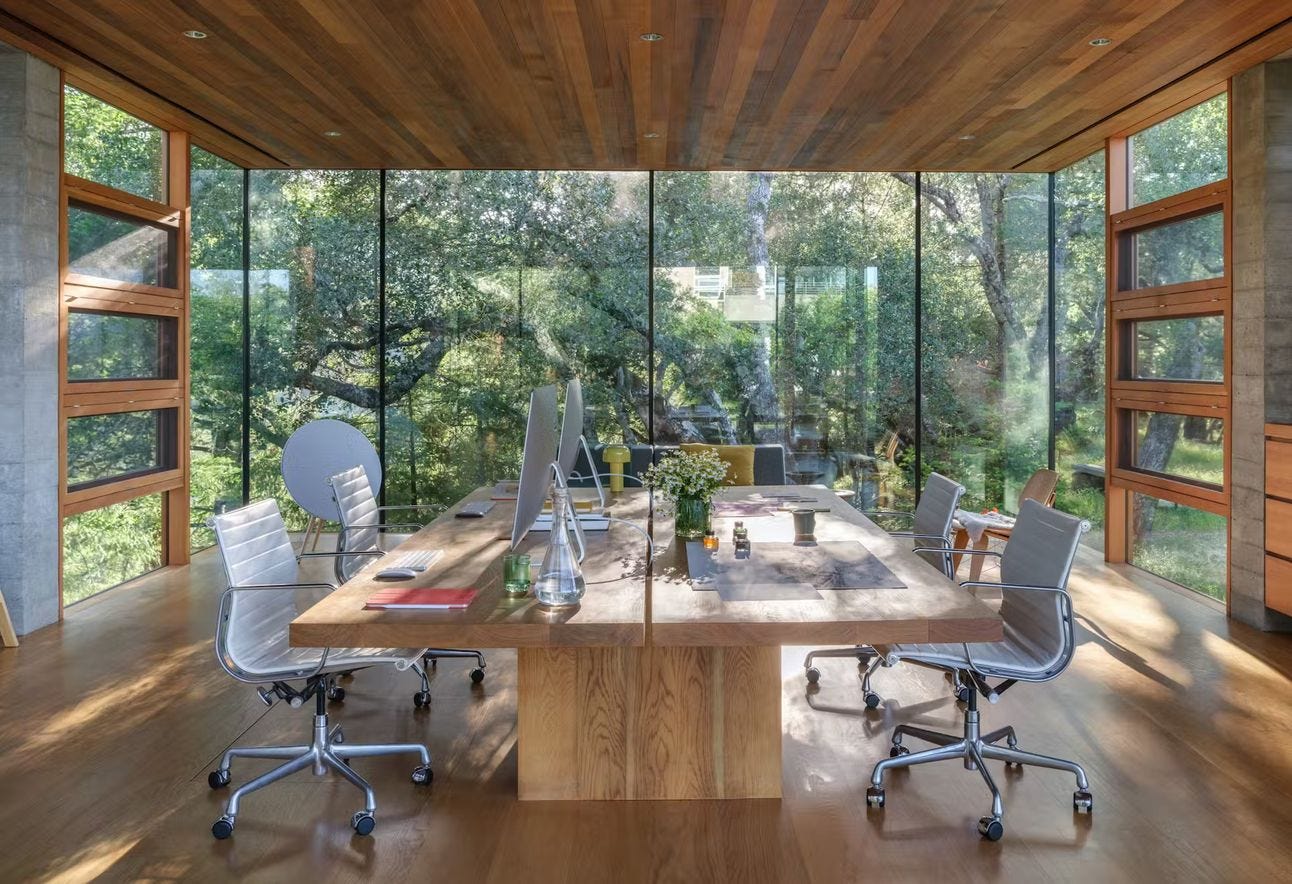
I mean, look at this beautiful studio/personal office Isaac built.
So, you’re working from home, cozy af. Freedom. No $27 salads. A bathroom that’s actually clean.
At least, that’s the expectation.
In reality, remote blurs the line between work and life until there’s nothing left to separate them. You grind harder, push longer, and before you know it, burnout is knocking at the door.
That’s the double-edged sword of remote.
The best remote companies get this. They don’t just allow remote work; they’ve mastered it. Airbnb, Life360, Deel, Linear—each proving you don’t need an office to build something world-class.
Even at multi-billion valuations, some teams have ditched HQs entirely.
Most of them didn’t start that way though.
Airbnb’s founders were in the trenches together, hacking their way through survival mode selling cereals to keep the lights on. They went back and forth between remote and on-site policies before finally committing.
Life360 had a physical office for years before transitioning to remote-first.
Deel scaled fast, but its core team was tight-knit in person before embracing a fully distributed model.
Remote just works.
But those companies aren’t startups anymore.
Early-stage teams need every bit of synergy and energy they can get.
Sure, on-site has serious downsides.
Commutes, for one, are soul-draining. One of my main commute hubs, for 9 years, was Paris Gare du Nord. It’s a warzone. Close to a 1 million travellers per day.
Costs. It goes without saying but renting an office in cities like SF, NY, Paris, London isn’t far from cheap.
Meetings & Politics. This deserves its own article one day. Let’s just say that inefficiency is a universal problem, remote or not.
Environment. Noise, distractions, interruptions, and let’s not forget my all time favorite, temperature wars.
I’ll admit, I wasn’t exactly the easiest to work with on that last one.
My toxic trait is complaining on Slack about our office overheating all year long.
At one point, they even bought me a Dyson fan just to shut me up. Didn’t work. I kept complaining.
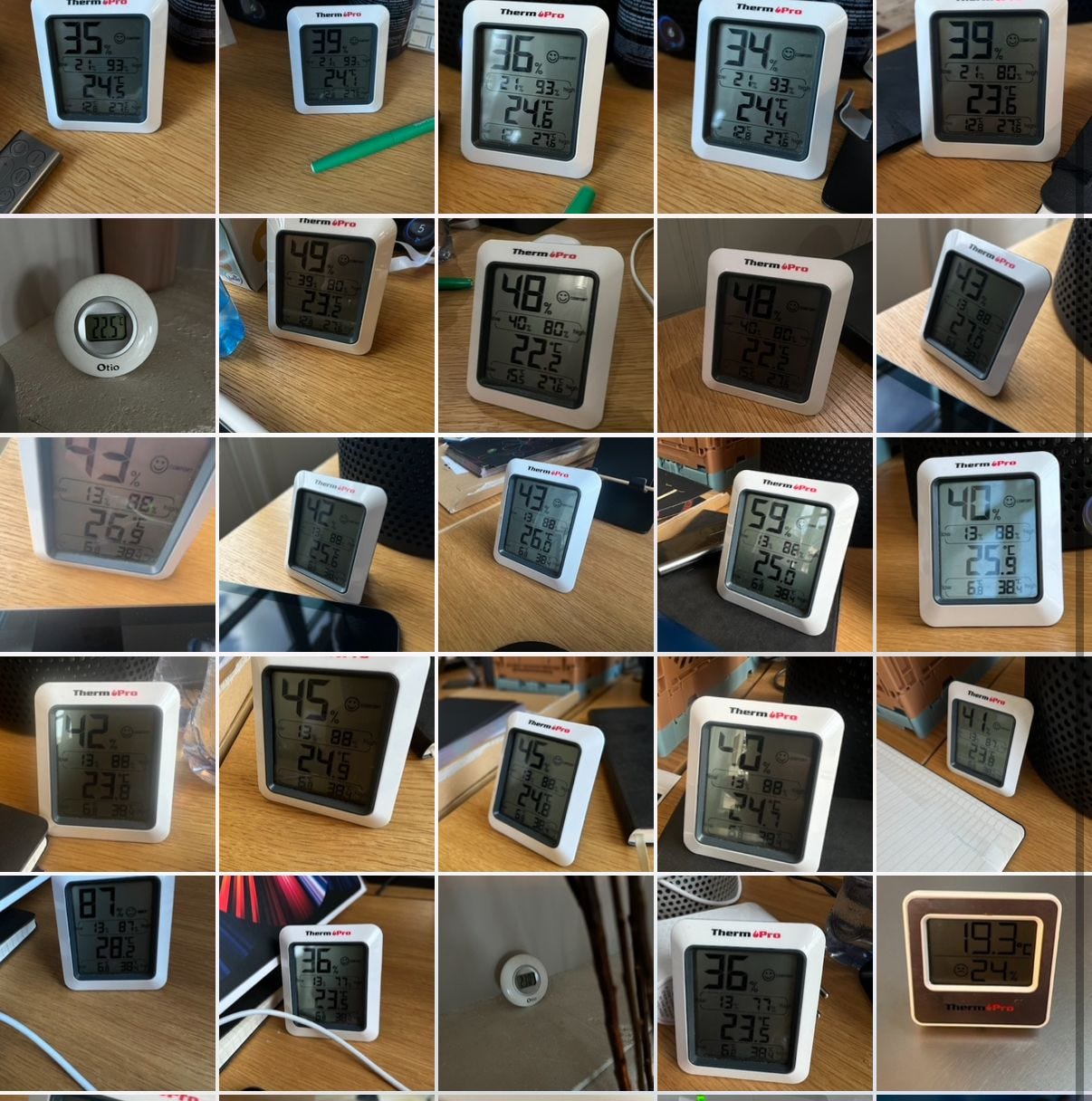
Here’s what on-site does have though: insane energy.
When you feel good in a space, when you start to own it, that’s when the magic happens.
Years ago, I almost joined an app studio two engineering friends co-founded in my hometown. They had two office options.
One was in the historical downtown, a beautiful old building full of character.
The other was a modern, soulless office park in the middle of nowhere.
They picked the office park.
I never joined them.
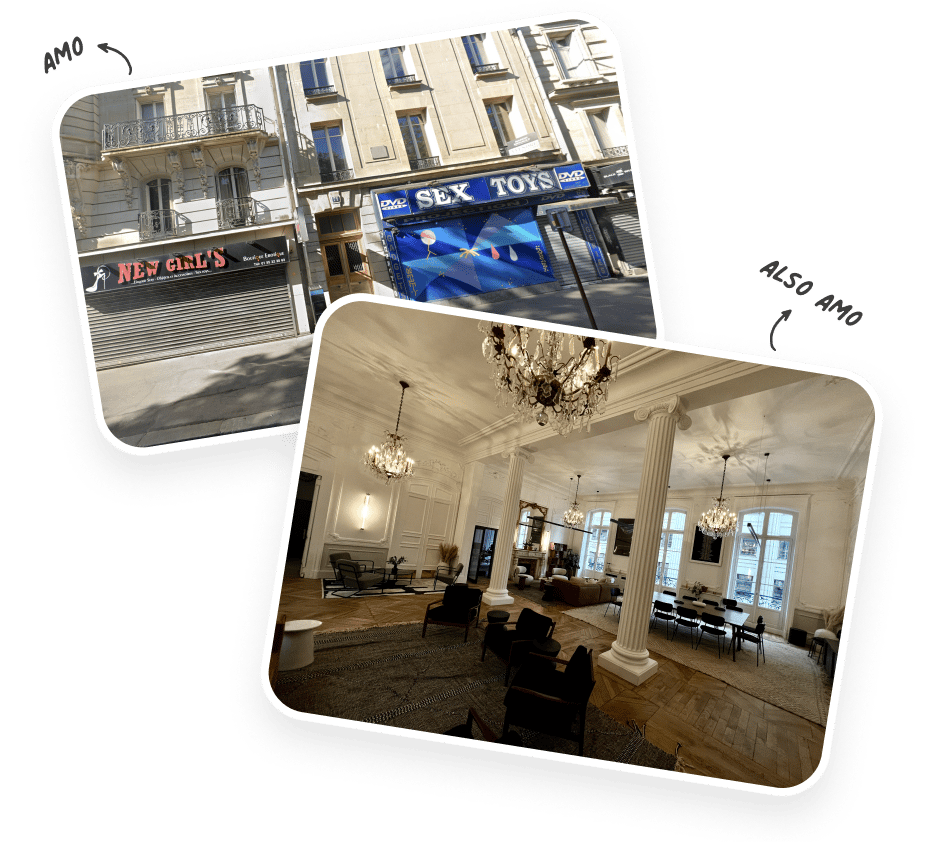
At amo, right from the start, all the cofounders signed up to be on-site because we knew we had to move fast. A handful of us crammed into a Pigalle apartment, figuring things out together.
But I won’t lie. The actual office we built is a whole different beast. It fuels creativity. It makes hiring easier. It’s a space that pulls people in.
Yes, you can build great things fully remote. No doubt about it.
But if I’m being honest, the most career impactful work I did were side projects but some of the best work I’ve ever done happened on-site.
Especially that last 10%, the part where a good feature becomes truly great.
There’s something different about sitting next to your team, fine-tuning details in real-time. No lag. No async back-and-forth. Just pure momentum.
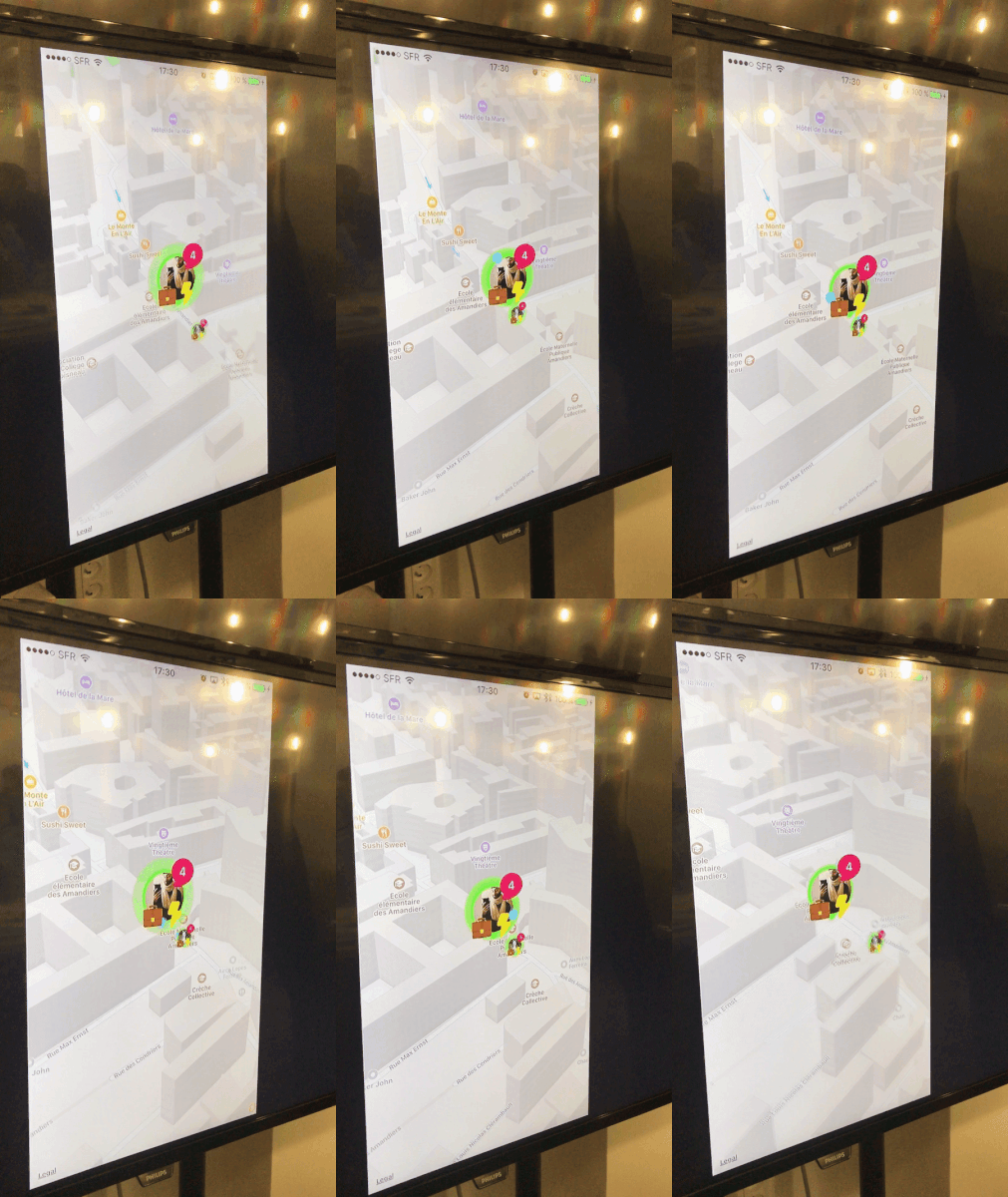
That’s exactly how it was with Charly in the early days of Zenly. We’d sit in front of a big TV screen at our desk bench, designing, tweaking, and iterating live.
Those defining and impactful moments? This can barely happen over Slack.
Some of the best ideas don’t happen in meetings. They happen in between the work—over lunch, in random hallway chats with people who aren’t even on your team, during those unplanned five-minute brainstorms that turn into something bigger.
You can’t force that. It just happens. Face to face.
On Slack, too much gets lost in translation. Plenty of people still don’t understand the unspoken rules of online communication.
Remote also makes mentorship much harder. Not impossible, but far less organic.
Junior hires need real-time feedback, quick iteration loops, and the kind of hands-on attention that builds confidence fast. It’s how they get quick wins, earn trust, and evolve into A-players. A recipe we applied for years. Successfully.
There’s no definitive answer to remote vs. on-site. Only trade-offs.
You can build incredible things remotely. You can do the same on-site.
The real question is which stage you are in your journey, as a company, as a team, as a builder.
It’s about common sense and adaptability.
Not about control and metrics.
Maybe it’s about knowing when to blend both.
Have you heard of hybrid?
Julien.