


This new piece took much much longer than the previous ones to pull off.
I pushed it back several times because I wasn’t happy with it.
Wide topic.
So many angles. I rewrote it from scratch three times, even made edits a few hours before hitting send.
Hope it resonates. Always open to discuss it 🫰
We’ve heard a ton about Founder Mode lately.
I’ve been wanting to write about Builders for a while.
The ones in the front lines, who cook, whose work actually makes or breaks entire products.
There’s a difference between talking about building and actually executing.
A difference between inspiration and perspiration, between ideas and execution.
I have a Notion folder bursting with hundreds of ideas collected over the last five years. Some are simple bullet points. Others include research, inspiration, even mockups.
Yet, they're all equally worthless.
How many times have you seen a new startup launch and thought: "I had that idea three years ago"?
Who cares. Ideas don't win. Execution does.
Steve Jobs (finally managed to quote SJ in my newsletter 😮💨) used to say that thinking a great idea is 90% of the work is a disease.
“The magic is the craftsmanship that transforms a cool idea into a great product.”
The past six months, before officializing the playbook, I kept telling myself that I should build in public with any projects that I’m working on.
I’ve also worked on countless side projects, vibe coded figma plugins, saas products, recorded design sessions of apps, icons.
I mean, I even wrote a piece about how impactful side projects can be.
Except for this actual newsletter, none of the above actually shipped. I’m not even sure they will eventually, and I think it’s okay.
Sometimes you just want to build stuff and you don’t know why. It’s both an urge and a curse.
And then you end up hating it.
I’ve shared a few words recently with friend Xavier (Jack), one the most creative designer I know, and something he said felt on point:
lately i stop myself from trying to achieve perfection
i found out that that is an impossible mission,
and through the process of trying to achieve it, i end up hating what i am building
and sometimes i even lose the essence
The essence.
It seems it doesn’t matter much these days.
Marketing overshadowing execution.
Slick communication, fancy videos, stunning brands, perfect landing pages. Hype to the max.
And then the product just sucks.
Customers end up disappointed, rarely connecting emotionally with the brand.
The gap between expectation and reality has never been wider, with companies spending more effort crafting compelling narratives than actually building great products.
Sure, it’s a great way to advertise and tease your work in advance. It’s a clever way to gauge interest and build hype.
But I'm tempted to think the best builders out there are actually the ones cooking relentlessly in their own kitchens, keeping their mouths shut and being discreet about it.
Sometimes, keeping both your ideas and executions secret is the only viable strategy.
To stay under the radar in our first year at amo, we tested our apps under ghost brands, iterating in stealth mode.
But hiding isn’t enough.
When you’re operating in a space where giants can execute your idea in weeks or even days, speed isn’t just an advantage. It’s crucial.
We knew this all too well from the start.
Big tech companies have infinite resources—brains and cash. But they also have layers of process, risk aversion, and internal politics. We knew it because we’ve been through it.
That’s where velocity becomes an unfair advantage.
Speed is everything.
But speed isn’t just about moving fast. It’s about removing everything that slows you down—endless meetings, unlimited processes.
At some point, if you’re not building fast, you’re falling behind.
You need to get in the trenches, get your hands dirty.
To become a General in the Cavalry, you have to actually know how to ride a horse.
–Brian Chesky
Hovering leaders are becoming a thing of the past. They need to lead by exemple, listening closely to their team’s expertise without falling in the consensus trap.
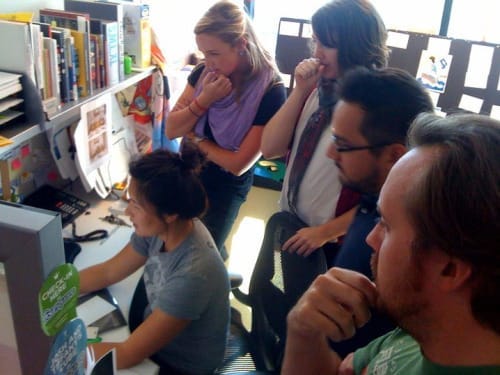
The minute you start designing by committee, shifting from infusing vision to trying to please everyone, you end up with a Frankenstein product.
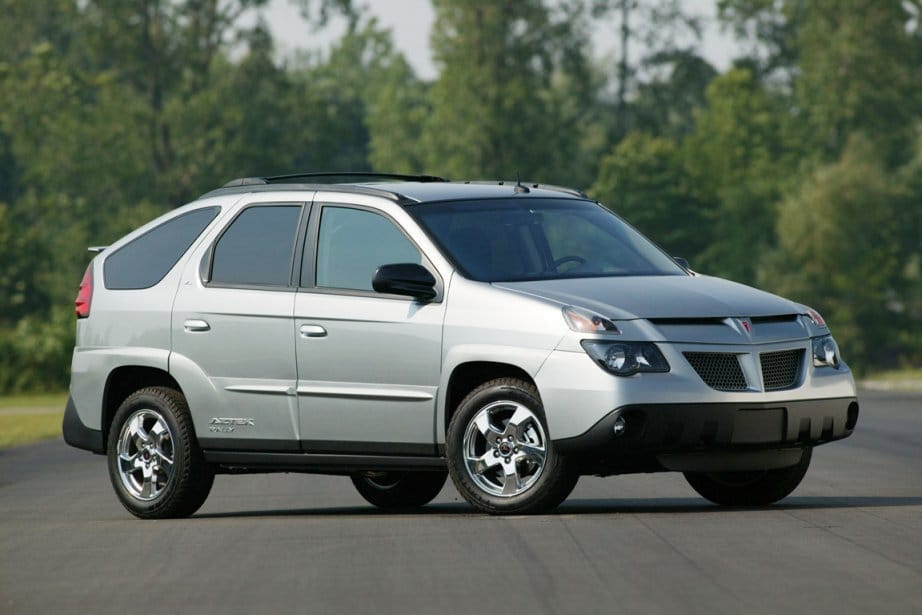
It doesn’t happen only in digital products of course. One of the most blatant and known case of Frankenstein’d product out there is the Pontiac Aztek.
The Aztek’s core concept (a sporty crossover) was diluted by cost-cutting and trying to please multiple internal factions, resulting in a Frankenstein product that flopped.
In hindsight, it would have been better to trust a small team with a clear vision for the car.
Big corps kill creativity because they’re afraid of ownership and politics.
John Carmack famously left Meta frustrated by slow decisions and bloated processes while working on VR. Too many cooks in the kitchen kept changing the recipe.
The saying "a camel is a horse designed by committee" perfectly captures how consensus dilutes bold ideas into safe, boring compromises.
Great products aren't democratic. They emerge from clarity of vision, decisiveness, and daring execution.
That’s why small, elite teams who own their work and move fast with conviction are making headlines again. Less process, more action.
Telegram, undoubtedly one of the best product teams in the world, operates with just 30 people.
Far from treating collaborators as mere executants, this can be achieved by giving all the autonomy and space builders need to thrive—skin in the game, ownership, trust.
If you're a founder, learn to build. Stop outsourcing your vision. Understand basic design and the essentials of your tech stack if you’re not technical. Sit with your team, shape the product, own the vision.
I wasn’t a Zenly founder, but I vividly remember having to quickly understand what was happening in engineering to run a beast like Zenly. It never felt like it was a chore—it made me a much better product designer moving forward.
If you're a product designer or product manager, whether you’re in a startup or freelancing, the tools available in 2025 to express and execute your ideas and show them to the world are truly unprecedented. Make the most of it.
If you're in a startup, stop waiting for permission. Explore and ship constantly. Out-execute. Work on those details, on this extra little thing. Go that extra mile. It compounds more than you think for both your company and your career.
Hard to talk about building without mentioning AI in 2025. Sure, it makes execution faster and easier. But speed without quality is pointless. Skip the half-baked MVPs—remember: Look & Feel Is Your Moat.
The winners of 2025 won't be those who talk loudest. They'll be those who execute relentlessly.
Builder Mode feels good.
But once you've built, it only gets started.
Ever heard of Distribution Mode?
Julien.